I don't have a phone. That's why I'm building this one.
People ask what phone the PresenceOS guy carries. The honest answer is none — my main SIM lives in a test unit on the workbench. Here's why that's not an accident, and what the real finish line for this project looks like.
Sooner or later everyone asks the same question: what phone does the PresenceOS guy actually use? They expect a spicy answer — some hardened GrapheneOS setup, maybe a de-badged Pixel, maybe (the horror) an iPhone.
The honest answer is that I don’t have one. My main SIM lives in a test unit on the workbench.
Look at the record
That answer sounds like a bit until you line up what this project has actually done, all of it written up on this blog and this site:
- Moved every line of source off GitHub and onto my own forge, on my own hardware.
- Run my own authoritative name servers.
- Run my own mail server, with a hard rule I refuse to break: no third party ever touches the mail path. No relay service, no cloud smarthost, no “just use Gmail underneath.” Owned hardware or nothing.
- Run my own relay and my own TURN server, so calls and messages between Presence devices ride my stack end to end.
- Refused to put a CDN in front of this website. When this page loaded, it came off hardware I can physically point at.
Now picture the man who did all of that pulling a stock Android out of his pocket — Play Services humming away, advertising identifier ticking over, location history quietly filling in the map of his life. That’s not a phone. That’s a contradiction with a SIM card in it.
So the SIM lives in the test unit. Calls ring on the bench, through my own relay and my own TURN server. Messages arrive end-to-end encrypted. The phone stays on the bench because the bench is where the work is.
The chef who’s too busy cooking to eat
There’s a long tradition here: the chef who never sits down to a meal, the cobbler whose kids go barefoot, the founder who is their own first unsolved customer. I’m building the phone I’d actually be willing to carry — and the fact that it doesn’t fully exist yet is exactly why I don’t carry one.
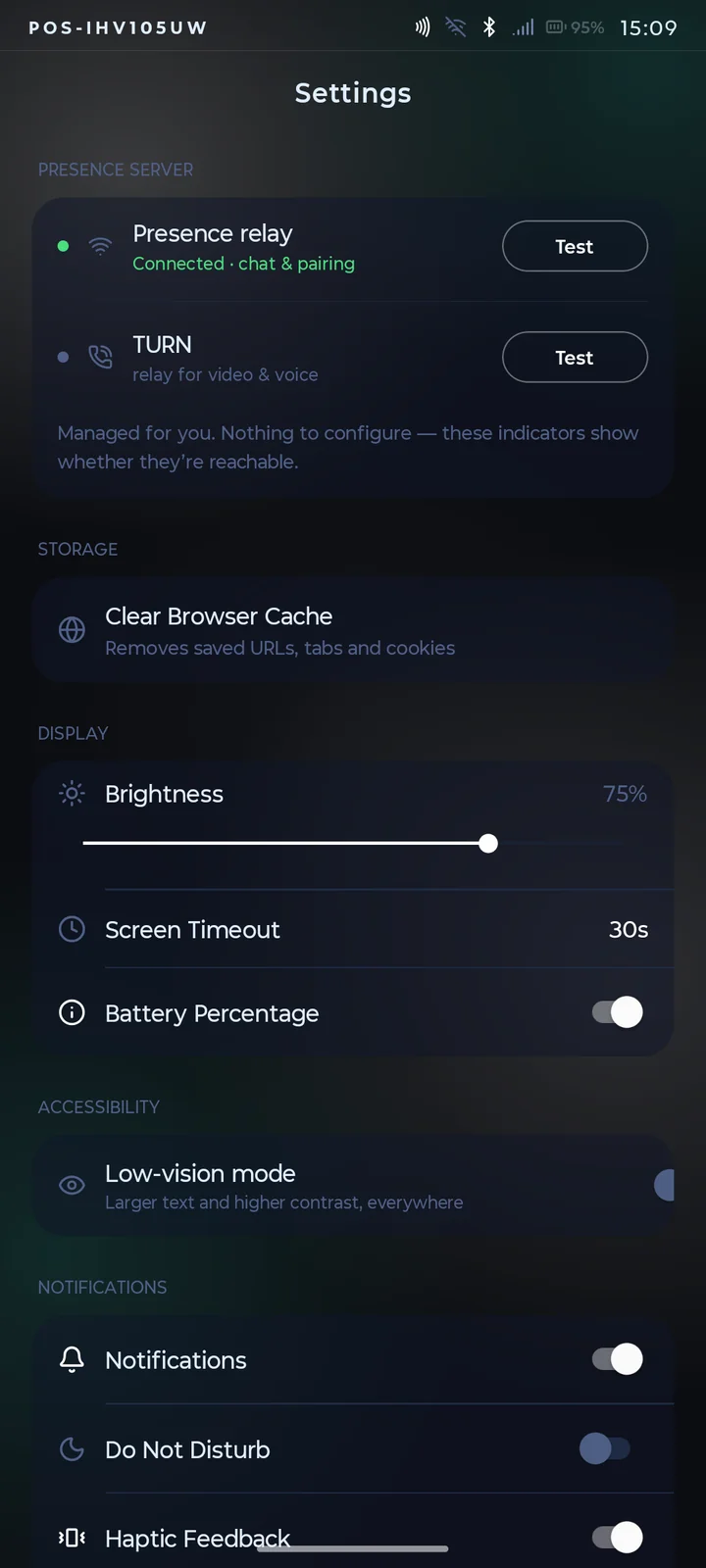
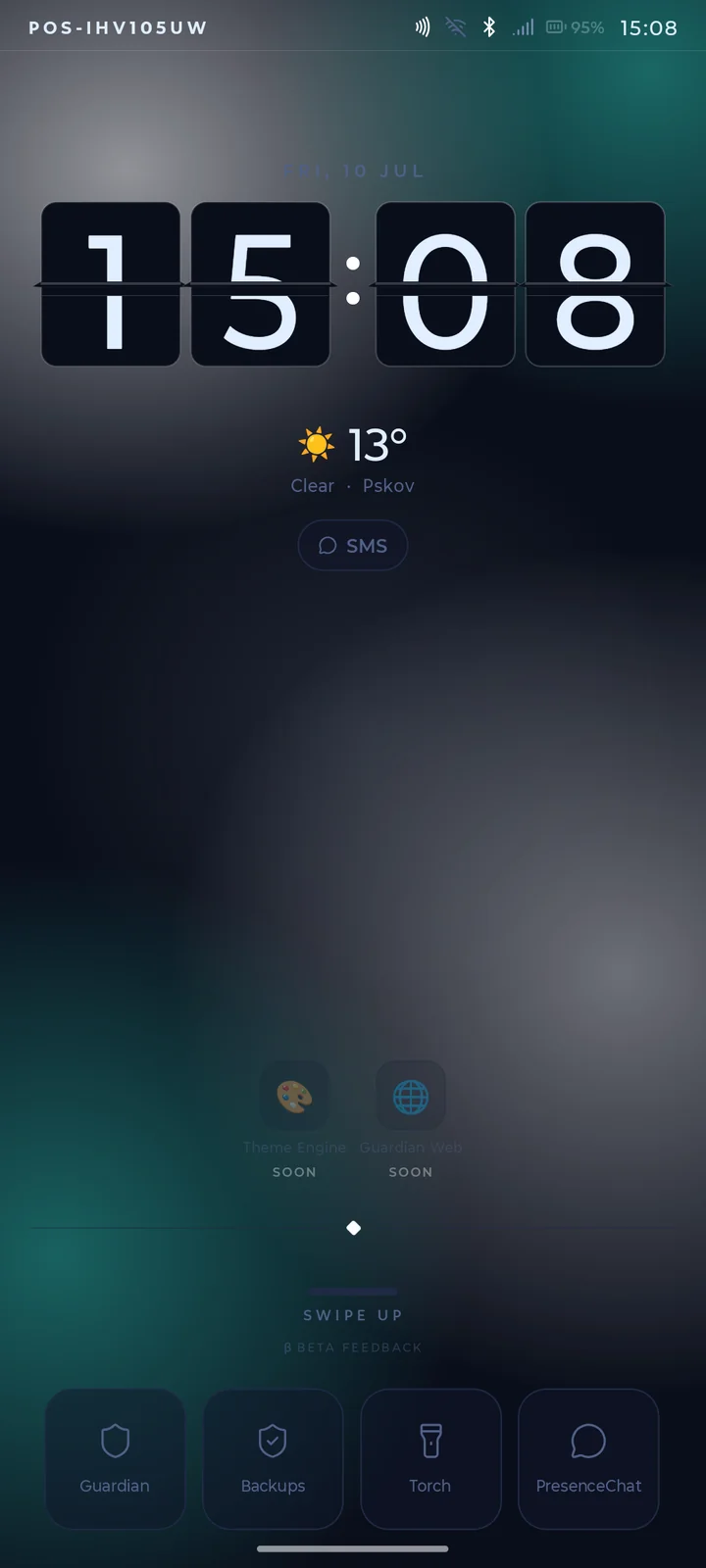
I want to be precise about what that means, because there are Presence devices out in the world working hard right now. The beta hardware is real: a moto g56 running PresenceOS, and it’s what every screenshot on this site comes from. What doesn’t exist yet is the version that clears my threat model end to end — the one where I’d drop my main SIM in, walk out the door, and never think about it again. That’s the bar. I hold my own product to it publicly, because if I won’t, you shouldn’t trust the product either.
Tonight’s boss level: Google’s ad machine
In the spirit of this blog’s tradition of uncomfortable admissions, here’s this week’s. The website is days old and Google hasn’t indexed it yet, so searching for “PresenceOS” mostly surfaces unrelated companies that happen to share the name. My short-term fix, through gritted teeth: a small search ad on the project’s own name until the real listing catches up.
Yes. I am paying Google so that people can find the phone I built to get away from Google. I know exactly how that sounds. It’s a bridge, not a lifestyle — the day the site ranks for its own name, the ad dies. But if you ever wondered whether I’m ideologically pure or just relentlessly practical, now you know.
User #1
So what does the finish line look like? Not a launch event. Not a spec sheet.
It’s the day the build boots on an unlocked g56, my main SIM drops into it for good, and the test unit on the bench becomes simply my phone. Founder becomes user #1. That’s the realest product milestone this project can ever hit, and every line of code I write is aimed at it.
Until then: if you call me, a phone rings on a workbench, through a stack I own from the name server to the ringtone. I answer it. Then I get back to building the phone that will finally let me leave the house like a normal person.
And if you want one before I’ve even got mine — that’s the order page. I find that genuinely funny, and also completely correct.