of parents with a child under 12 said they were concerned their child might spend too much time on screens.
Pew Research Center ↗What parents keep asking for — and keep not getting.
Apple continuously refuses to build the phone parents actually asked for.
Parents did not ask for another dashboard, passcode or nightly negotiation. They asked for a phone their child could use without being consumed by it.
Keep scrolling ↓Actual PresenceOS screen recording · Moto g56 5G
The evidence
Research and surveys suggest parental controls and screentime are not solving the problem.
Parents are already limiting, monitoring, negotiating and taking devices away. The concern remains because the environment itself has not changed.
of parents of children aged 5–11 said they already limit when or how long their child can use screens.
Pew Research Center ↗said they use parental controls to restrict screen use. Parents are already trying.
Pew Research Center ↗Parents are not apathetic.
They are exhausted.Doing nothing is still a decision
If you ignore this project, you are not choosing neutral ground.
You are handing more of your child’s upbringing, attention and future over to Apple, Google and Android systems — effectively adopting part of their digital life out to companies whose success depends on engagement.
Every year without a real alternative makes their systems more normal, more essential and more deeply embedded in childhood. Someone will shape your child’s digital life.
It should not be decided by engagement metrics. It should be shaped by parents.
What Apple built
They gave parents controls over the same attention machine.
Apple’s Screen Time lets parents view usage, set app limits, schedule downtime, block content and approve requests for more time. Those are useful controls. But they still ask a parent to manage the same app ecosystem, notifications and engagement loops.
Read Apple’s own Screen Time description ↗01Install everything
↓
02Add restrictions
↓
03Child asks for more time
↓
04Parent becomes the enemy
A safer setting is not the same thing as a safer phone.
What this does to families
You are being asked to defeat an industrial attention system with a four-digit passcode.
One more minute.
Just let me finish this.
Everyone else is allowed.
Why don’t you trust me?
The phone creates the pull. The parent is forced to enforce the limit. Then the family absorbs the conflict.
The uncomfortable incentive
A phone designed to be put down is bad for engagement.
The wider mobile economy rewards more sessions, more notifications, more subscriptions, more purchases and more time inside apps. Reducing use is not the natural outcome of that model.
They keep improving the lock. We removed the door.
This is PresenceOS’s design thesis: the child should not have to out-resist a system built to retain them, and the parent should not have to administer that struggle every day.
The answer Apple did not build
PresenceOS is not more parental control.
It is less to control.
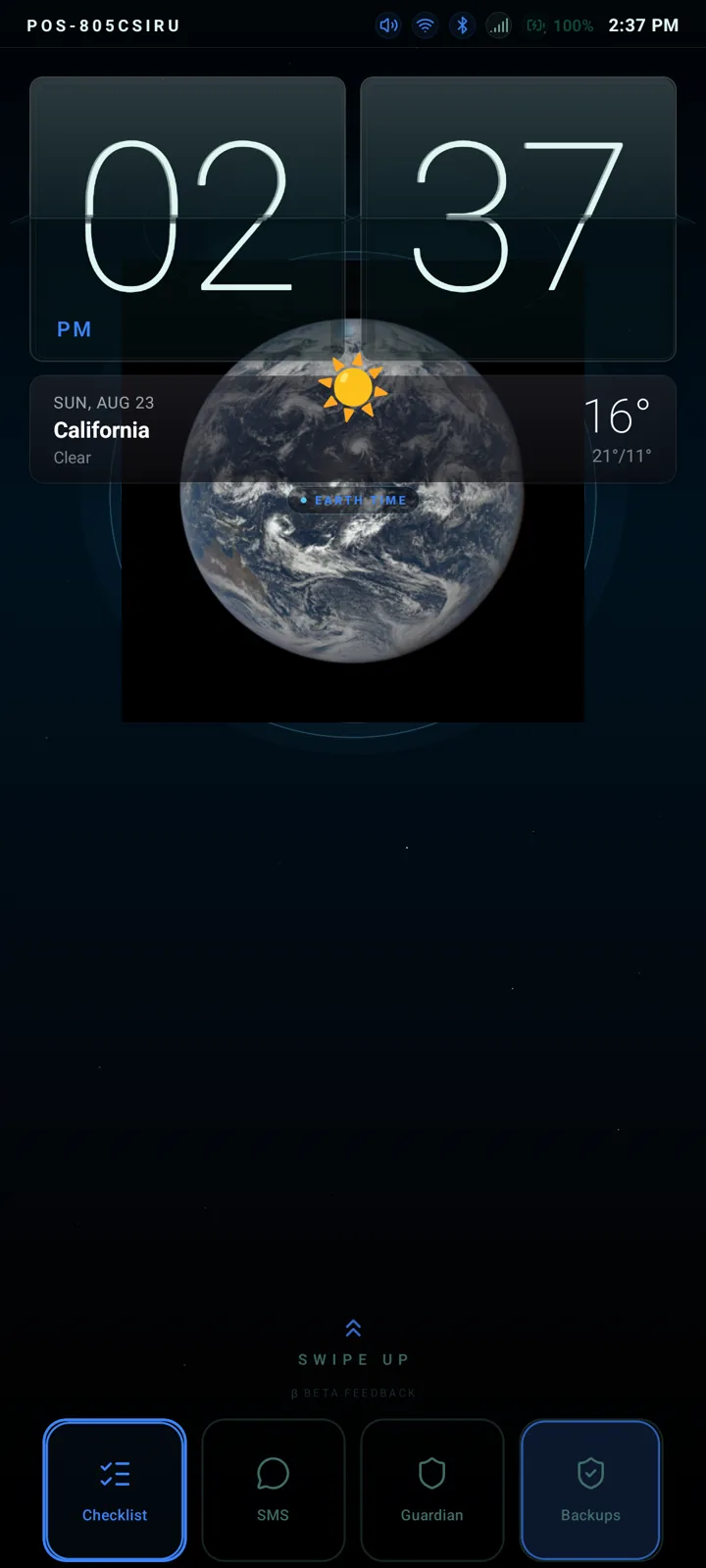
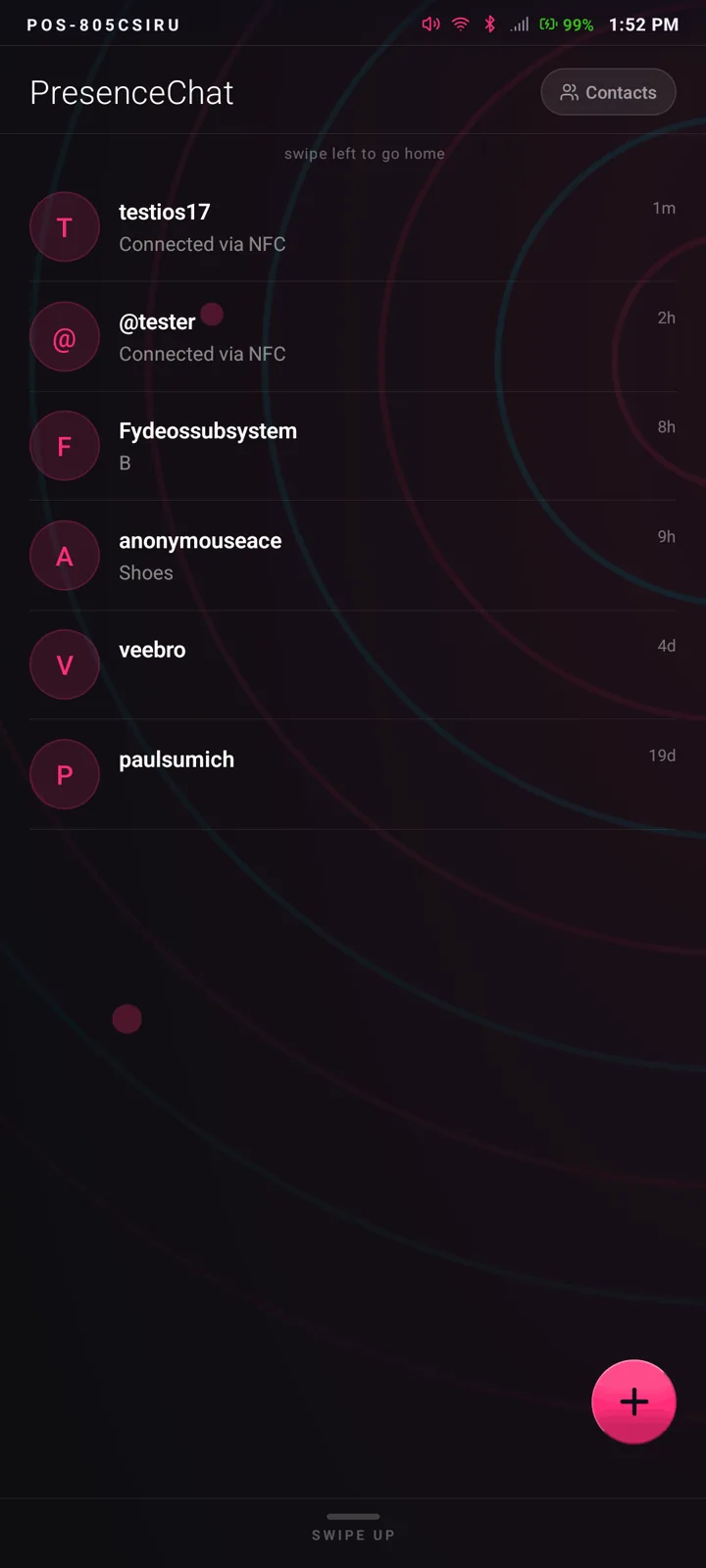
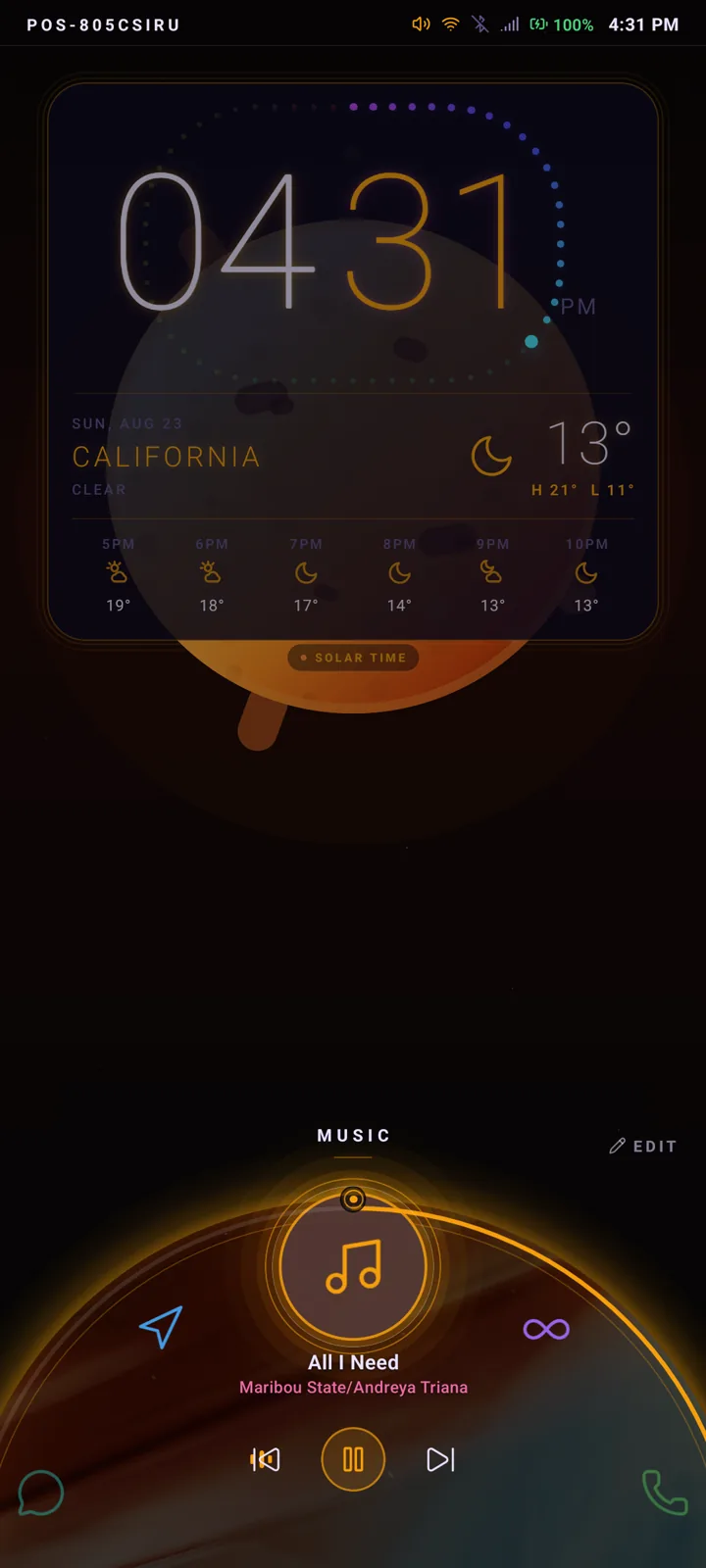
A real operating-system experience that keeps the things a young person needs — calls, private messages, maps, music, camera and safety tools — without making infinite consumption the centre of the device.
No feedNothing endless
Still usefulCalls · Maps · Music
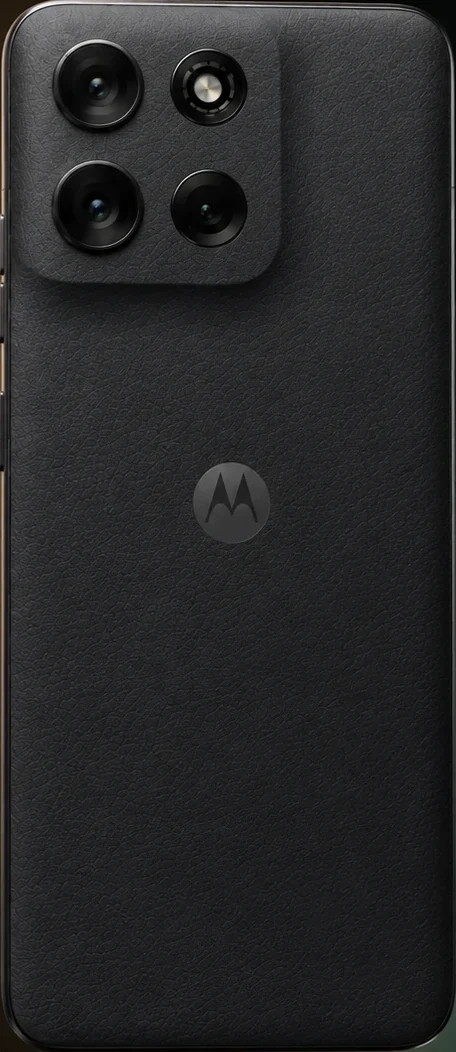
Drag to inspect the real PresenceOS interface
The hardware is a Motorola moto g56 5G. PresenceOS is an
independent project, not affiliated with or endorsed by Motorola.
How screentime actually works here
There is no app to limit — until a parent hands one over.
The people they actually know. Music. The open web. The everyday tools a phone should have.
Instagram, TikTok, an emergency app — the “Android” or “iPhone” apps exist on the phone only when a parent grants them. Like handing over a key, not resetting a timer.
You don’t police the feed. You decide if it is ever installed.
Same child. Different environment.
Stop blaming willpower for a design problem.
Conventional smartphone
The entire attention economy, with a timer.
- Infinite feeds remain installed
- Notifications repeatedly pull attention back
- Limits become daily negotiations
- Parents police; children search for loopholes
Result: constant friction around a device designed for more use.
PresenceOS
A useful phone designed to have an ending.
- Communication remains available
- No endless social feed at the centre
- Tools are opened with a purpose
- The phone can disappear when the task is done
Result: technology supports life instead of competing with it.
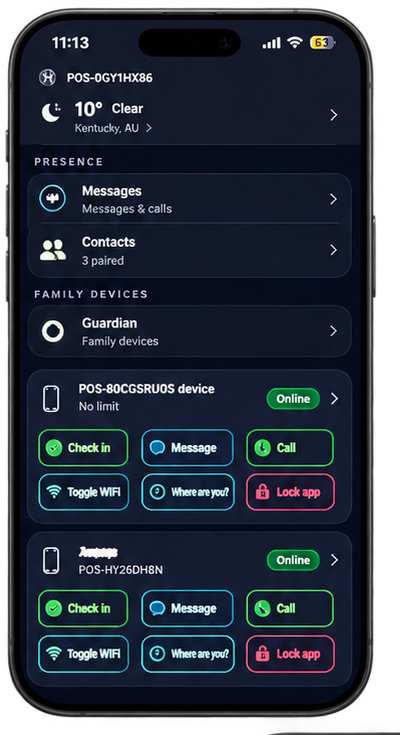
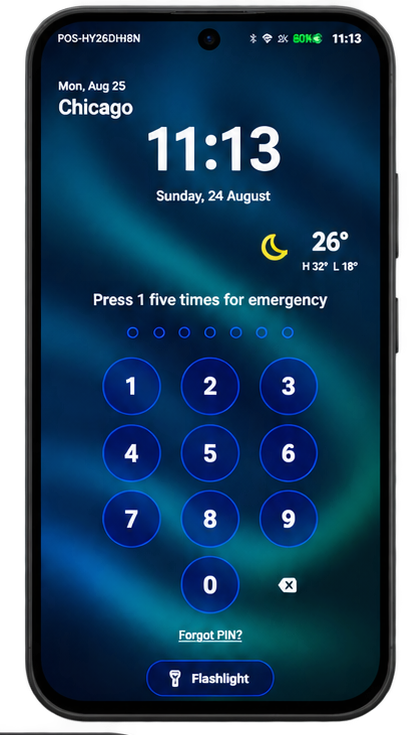
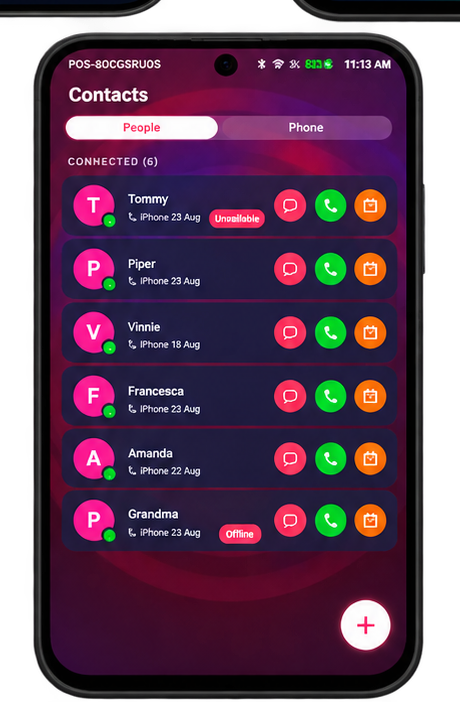
Not a mock-up. Not a parental-control app.
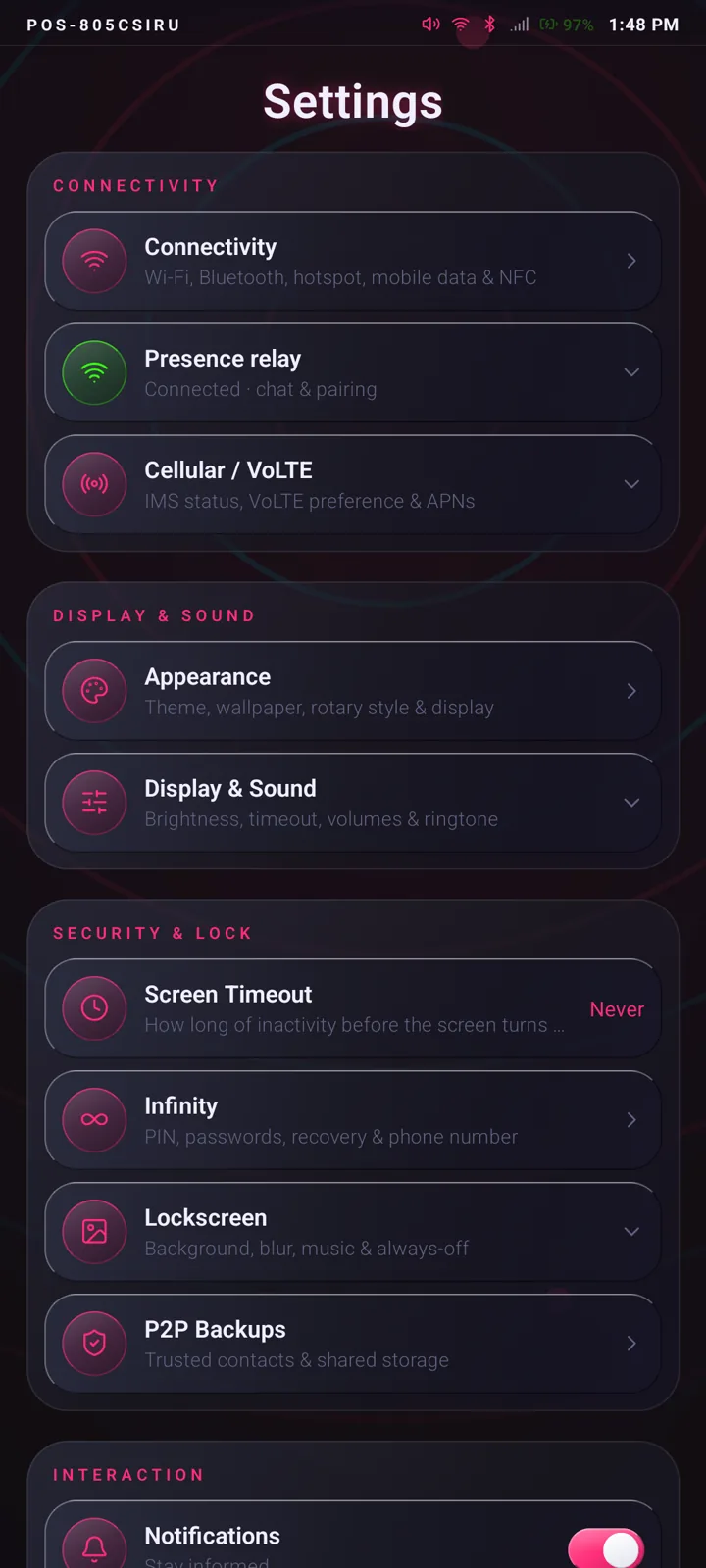
This is the actual operating system.
Real PresenceOS screens, running now. Clear, personal and deliberately finite.
Credit where it is due
Apple set a bar in hardware and software that almost no one will reach.
I know exactly how high it is. Everything you just saw is a few months of solo development — one person, no team, no funding.
A few months. One person. Give it a couple of years.
What parents are actually asking for
A phone that does not become the third parent.
PresenceOS does not promise perfect children, perfect habits or a conflict-free home. It simply stops placing a system engineered for repeated engagement between you and your child.
The boundary lives in the design, not only in your enforcement.
Your child can stay reachable without carrying every addictive platform.
The phone is a tool for a moment, not the destination of every spare moment.
Founding family pilot
You should not have to choose between contact and childhood.
Give your child calls, messages, navigation, music, camera and independence — without handing them the entire engagement economy.
Sources and context
The parent statistics above come from Pew Research Center’s nationally representative 2020 survey of 3,640 U.S. parents. Apple feature descriptions are taken from Apple’s current Screen Time and Child Safety pages. PresenceOS’s statements about industry incentives are its own design thesis, not a claim that Apple has publicly stated an intention to harm children.